Motocross Training Tips | Rider Development | Nelmgerian MX
Every motocross rider dreams of getting faster, improving their technique, winning races, and maybe one day standing on top of the podium.
But what separates a rider who simply shows up at the track from a rider who consistently improves?
Preparation. Discipline. Work ethic. And learning from every ride.
At Nelmgerian MX, we believe becoming a better motocross rider isn't just about twisting the throttle. It's about putting in the work before race day, understanding your motorcycle, taking care of your body, and learning from every practice session and race.
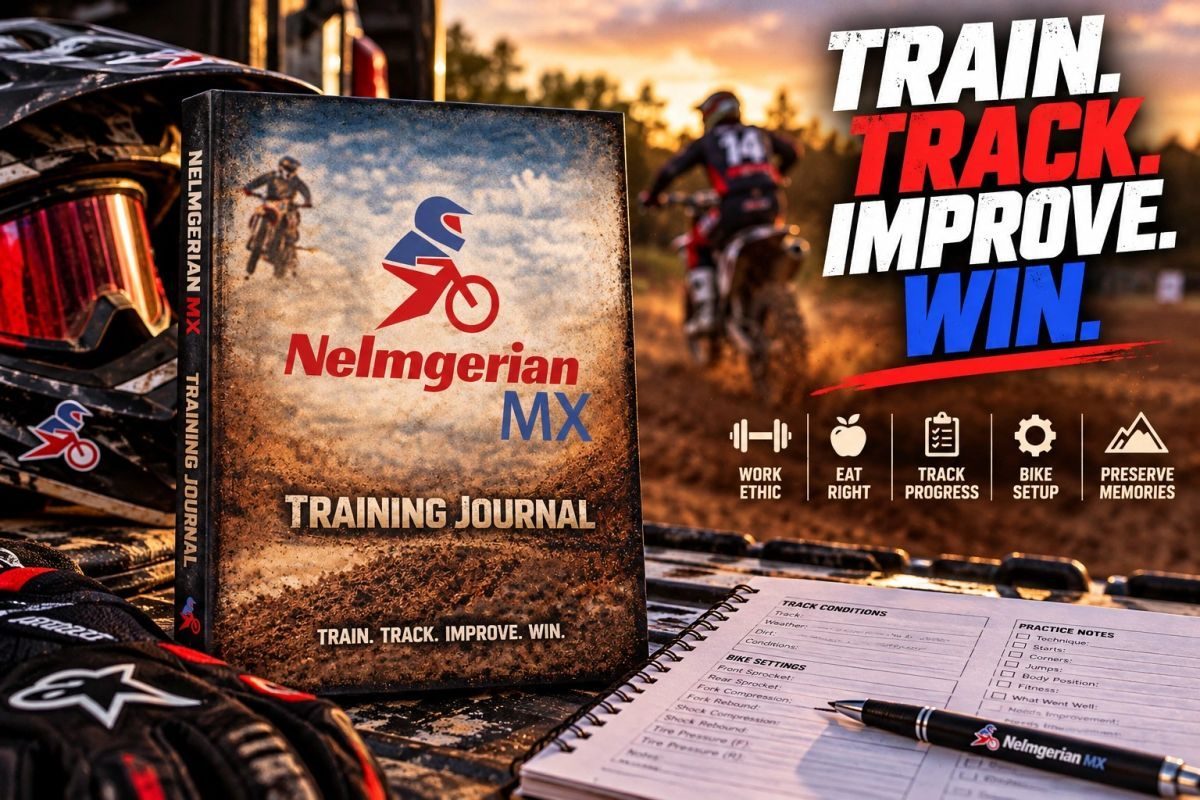
That's why we created the Nelmgerian MX Training Journal — Train. Track. Improve. Win.
It's more than a notebook. It's a place to build better habits, document your progress, track motorcycle settings, and preserve the memories that make motocross special.
1. Work Ethic: Champions Are Built Between Races
Everyone loves race day.
The sound of engines firing up. The smell of race fuel. The excitement of lining up behind the gate.
But race day is only a small part of becoming a better rider.
The real work happens during the week.
It's practicing starts until they become second nature. Working on corners that give you trouble. Improving your braking technique. Building endurance so your final lap can be as strong as your first.
It's also showing up on days when you don't necessarily feel like training.
Talent might get you noticed, but consistent effort is what helps you improve.
The Nelmgerian MX Training Journal encourages riders to establish goals before the season, develop training routines, and evaluate their progress.
Because improvement doesn't happen by accident.
2. Physical Fitness: Train Your Body, Not Just Your Bike
Motocross is physically demanding.
Riders need strength, endurance, balance, flexibility, coordination, and mental focus to control a motorcycle over changing terrain.
You can have the best motorcycle in your class, but if you're exhausted halfway through a moto, your performance can suffer.
That's why off-bike training matters.
The Training Journal introduces a suggested training structure that includes:
- Bike skills and starting techniques
- Strength and mobility exercises
- Endurance and consistency training
- Active recovery and rest
Whether you're building leg strength, improving core stability, or working on cardiovascular endurance, physical conditioning should support your riding goals.
Young riders should follow age-appropriate training programs with guidance from qualified adults or coaches.
You don't have to train like a professional to develop professional habits.
Start with consistency.
3. Nutrition and Recovery: Fuel the Rider
You wouldn't expect your motorcycle to perform properly with the wrong fuel or neglected maintenance.
Your body deserves the same attention.
What you eat, how well you hydrate, and how much you rest can influence your energy, concentration, and recovery.
Motocross riders should develop healthy habits that support their activity level.
That includes eating balanced meals, staying hydrated throughout the day, and getting adequate sleep.
A long race weekend can be especially demanding, with early mornings, changing weather conditions, multiple motos, and plenty of time spent in riding gear.
Learning to prepare your body is another part of learning to prepare for competition.
The Training Journal gives riders a place to reflect on how they felt during training and identify patterns in energy, fatigue, and performance.
Taking care of your body is part of taking your racing seriously.
4. Document Every Practice: Don't Just Ride — Learn
Think about your last practice session.
What did you work on?
Were your cornering techniques better?
Did your starts improve?
Where were you losing time?
What did your coach tell you to change?
Now think about whether you'll remember all those details three months from now.
Probably not.
That's where documenting your practice sessions becomes valuable.
The Nelmgerian MX Training Journal includes dedicated practice-day pages where riders can record information such as the date, track, weather, dirt type, track conditions, bike settings, and results.
It also provides room for notes and lessons learned.
After practice, ask yourself:
What did I do well today? What needs improvement? What am I going to work on next time?
Writing those answers down turns a day of riding into information you can use.
Over time, those notes become a record of your development.
5. Bike Setup: Stop Guessing and Start Tracking
Every motocross rider knows that track conditions change.
One weekend you're racing on hard-packed dirt.
The next weekend you're riding deep sand.
Then comes a muddy race where everything feels different.
Your motorcycle setup can make a difference in how comfortable and confident you feel.
But here's the problem.
You make an adjustment that works great at one track, and two weeks later you can't remember what you changed.
Was it the fork compression?
Rear shock rebound?
Tire pressure?
Sprocket combination?
With the Nelmgerian MX Training Journal, riders can document important motorcycle settings, including:
- Front and rear sprocket sizes
- Front and rear suspension compression
- Front and rear suspension rebound
- Sag measurements
- Fork height
- Front and rear tire pressure
The journal also provides space to record track conditions and race results alongside those settings.
Imagine returning to the same track six months later and being able to look back at the setup you used.
Instead of starting from scratch, you have historical information to review.
Your previous race notes can become a valuable tool for your next race.
Always make setup adjustments using appropriate manufacturer guidance or qualified technical assistance.
6. Body Position: Small Improvements Can Make a Big Difference
Body position is one of the fundamentals of motocross riding.
How you position yourself on the motorcycle affects balance, control, and how you respond to changing terrain.
Standing through rough sections, maintaining control under braking, positioning your body through corners, and staying balanced over jumps are all skills riders continue developing.
And those skills take practice.
The Training Journal's skill-development and practice notes provide space to document what you're working on.
Maybe your coach noticed that you were sitting too far back entering corners.
Maybe you need to improve your standing position through braking bumps.
Or maybe you finally figured out a technique that made a difficult section feel easier.
Write it down.
The next time you head to the track, you'll know exactly what you want to focus on.
Practice with a purpose, not just to put hours on the bike.
7. Race-Day Organization: Keep Your Information in One Place
Race weekends can get hectic.
Between registration, practice, qualifying, motorcycle maintenance, gate picks, and multiple motos, there is a lot to keep track of.
The last thing you want is to forget what worked during practice.
The Nelmgerian MX Training Journal includes race-day pages designed to keep important information together.
Riders can record the track, weather, dirt conditions, motorcycle settings, qualifying results, individual moto finishes, overall results, and notes.
Instead of relying on memory, you have a written record.
This is especially useful when racing different tracks throughout the season.
As the journal fills up, riders can compare performances and identify areas where they've improved.
It also encourages something every young racer should learn:
Being organized is part of being prepared.
8. Historical Data: Learn From Your Past to Improve Your Future
One of the most valuable things about keeping a training journal is what happens over time.
A single practice entry might not seem like much.
But after weeks or months, those entries begin telling a story.
You might notice that your lap consistency has improved.
Maybe you're getting better starts.
Maybe certain track conditions continue giving you trouble.
Or perhaps you've discovered a motorcycle setup that consistently makes you feel more comfortable.
Without records, these details can be difficult to remember.
With a journal, you can review your progress, recognize patterns, and make more informed decisions.
The journal also includes opportunities to revisit the goals you established before the season and during race season.
Did you accomplish them?
What worked?
What could you have done differently?
What should your next goals be?
Progress becomes easier to recognize when you take the time to document it.
9. More Than a Training Journal — A Lifetime of Motocross Memories
Here's something we believe is just as important as the training information.
The memories.
Ask any longtime motocross family about their favorite racing experiences.
They'll probably tell you stories about their first race, their first trophy, the friends they made, the tracks they traveled to, and the weekends spent together.
Some of those memories have nothing to do with winning.
Maybe it was the first time you cleared a jump that had intimidated you for weeks.
Maybe it was a muddy race where you finished last but refused to quit.
Maybe it was the weekend your entire family loaded up the trailer and traveled across the country.
Those moments matter.
That's why the Nelmgerian MX Training Journal includes pages where riders can attach photographs from practices and races.
Add pictures of your favorite moments.
Write down what happened.
Save the memories.
Years from now, you might open that journal and remember the motorcycle you rode, the tracks you raced, the friends you made, and how far you've come.
Trophies collect dust. Memories last a lifetime.
10. Teaching Young Riders Responsibility Beyond the Track
At Nelmgerian MX, our mission goes beyond creating motocross books.
We want to encourage young riders to develop skills and habits that benefit them both on and off the motorcycle.
Keeping a training journal can help teach responsibility, goal setting, organization, self-reflection, and accountability.
Those are valuable lessons for school, future careers, and everyday life.
Learning to write down goals, follow a plan, evaluate results, and make adjustments is something riders can carry with them long after their racing days are over.
And there's another benefit.
It encourages kids to read, write, think critically, and document their experiences through a sport they already love.
That's a big part of the Nelmgerian MX mission.
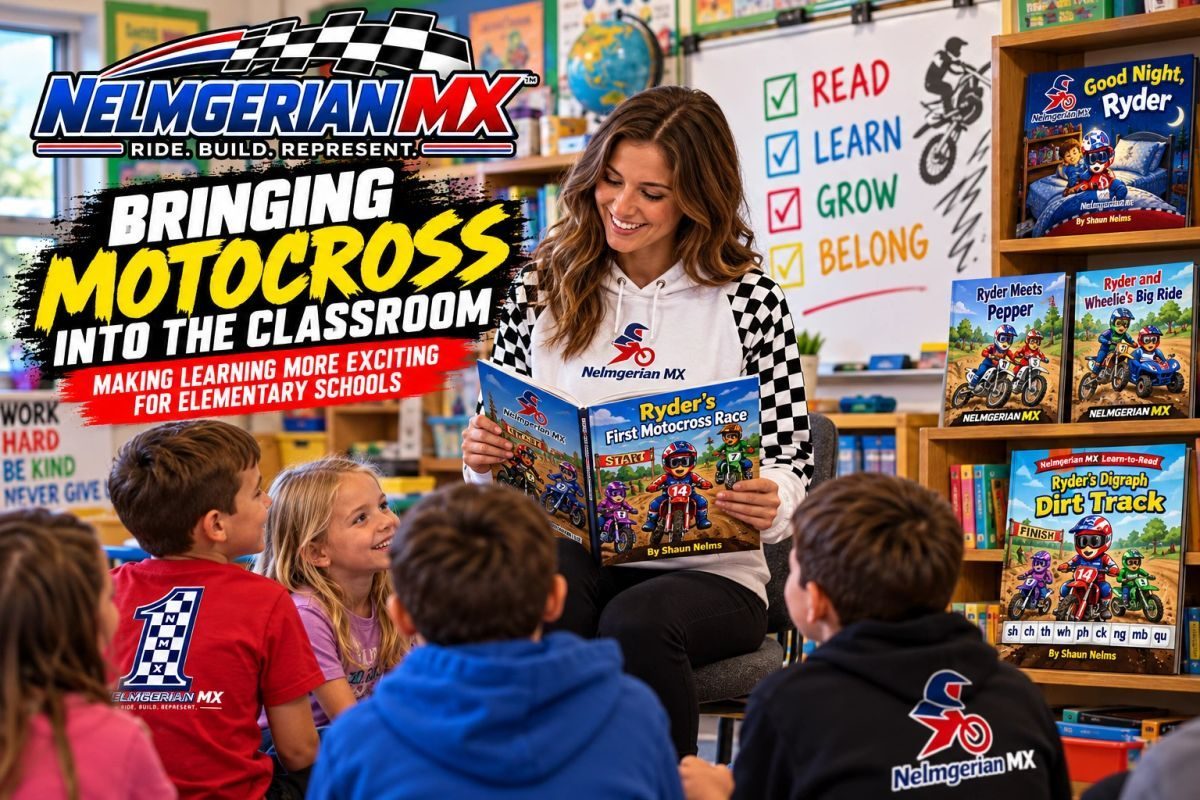
We're using motocross to connect young people with reading, writing, learning, and personal growth.
The Difference Between Riding and Training
There's nothing wrong with going to the track just to have fun.
That's one of the best parts of motocross.
But if your goal is to improve, compete, and become the best rider you can be, every practice should have a purpose.
Know what you're working on.
Track your progress.
Take care of your body.
Learn your motorcycle.
Stay organized.
Remember your experiences.
And most importantly, enjoy the journey.
The Nelmgerian MX Training Journal was created to help riders do exactly that.
Whether you're a young rider preparing for your first race, a dedicated amateur working toward bigger goals, or a motocross family looking to preserve years of racing memories, this journal gives you a place to record the journey.
Because becoming a better motocross rider isn't about one race, one practice, or one trophy.
It's about the work you put in along the way.
TRAIN. TRACK. IMPROVE. WIN.
About Nelmgerian MX
Nelmgerian MX creates motocross-inspired books, educational resources, and rider-focused products designed to connect the excitement of dirt bikes with reading, learning, personal development, and the motocross lifestyle.
Our mission is to help grow the sport while encouraging the next generation of riders to work hard, help others, and keep learning.
Ride. Build. Represent.
Explore our books and the Nelmgerian MX Training Journal at www.nelmgerian.com.